It is the shanty almost everyone can sing at least one line of — and the questions people ask about it are always the same. Is "Drunken Sailor" a real sea shanty? What is it actually about? And is it public domain, so you can sing it, record it or print it? Here are the short answers, then the longer story.
The short answers
- Is it a real sea shanty? Yes. It is a traditional sailors' work song, listed as No. 322 in the Roud Folk Song Index, and it was being sung at sea by the 1830s.
- What does it mean? On the surface it asks what to do with a sailor who has had too much, and each verse suggests a way to sober him up or punish him. At sea it was a work song: the crew sang it while walking along the deck hauling a rope.
- Is it public domain? The traditional words and tune are so old that, under UK copyright rules, any copyright in them would long since have run out. But a modern arrangement, new verses, a recording or a printed edition can have rights of its own — see below.
Where the song comes from
According to the song's Wikipedia article, the first published description of "Drunken Sailor" comes from an account of an 1839 whaling voyage out of New London, Connecticut, to the Pacific — F. A. Olmsted's Incidents of a Whaling Voyage, published in 1841, which noted the tune alongside the words. A five-verse set of words and tune appeared in print in the third edition of Davis and Tozer's Sailor Songs or 'Chanties' in 1891.
Not everyone rated it. When John Masefield published the words in A Sailor's Garland in 1906, he called it a "bastard variety" of shanty that was "seldom used". On the other hand, Whall, another writer on shanties, claimed it was one of only two shanties sung in the Royal Navy, where singing at work was generally frowned upon.
The tune is in the Dorian mode, which gives it that slightly minor, rolling sound. Wikipedia notes it resembles the Irish song Óró sé do bheatha abhaile, because the two share a chord progression.
What kind of shanty is it?
Shanties were tools, and each kind suited a particular job (our guide to what sea shanties were for explains the types). "Drunken Sailor" was a stamp and go or walk away shanty — Masefield called it a "runaway chorus". Instead of pausing between heaves, the crew took hold of a rope and marched along the deck with it, so the song needed a brisk walking pace. That is why it has such a steady, marching beat.
So what does the song mean?
There is no hidden meaning to decode. The chorus — "Hoo-ray and up she rises, early in the morning" — kept the crew in step while they hauled. The verses are a running joke: what shall we do with the drunken sailor? Put him in the longboat till he's sober. Shave his belly with a rusty razor. In some performances each verse suggests another way to sober up or punish the sailor; in others the singers make up questions and answers about different people.
Because the shantyman could invent new verses on the spot, the words were never fixed. Later sailors' versions and parodies brought in other people and events — and singers still add their own. Collectors kept the older versions: Percy Grainger recorded a singer called Charles Rosher performing it in 1906, and by the 1900s it had been taken up for glee singing at Eton College.
Is "Drunken Sailor" public domain?
The UK Intellectual Property Office's copyright notice on duration says a work of unknown authorship is protected for 70 years from the end of the year in which it was made — or, if it is made available to the public in that time, 70 years from the end of the year it was first made available. "Drunken Sailor" has no known author and was in print by 1841, so on those rules any copyright in the traditional words and tune expired long ago. The IPO also says that once works are no longer protected, they are free to use.
That doesn't cover everything with the song's name on it:
- Arrangements and new words. Someone who writes a new arrangement or new verses may own copyright in that new work. GOV.UK's general rule for written, dramatic, musical and artistic works is 70 years after the author's death.
- Recordings. A sound recording has its own copyright, separate from the song: GOV.UK gives 70 years from when it's first published.
- Printed editions. The layout of a published edition — a songbook, say — is protected for 25 years from first publication.
So the safest approach is to work from the traditional words and the traditional tune, not from a particular modern version or recording. The IPO warns that "public domain" is often used loosely, and suggests checking whether a work is still protected before you use it. This is a general summary, not legal advice; for a specific project, the IPO's guidance is the place to start.
How we use it
Our shanty designs use only a handful of the best-known traditional lines, such as "What shall we do with the drunken sailor?", "Early in the morning" and "Hoo-ray and up she rises" — the lettering and drawings are our own. You can read more about why we named the shop after the song on our About page, browse the sea-shanty lettering designs, or find out where other sailors' sayings came from in Three sheets to the wind.
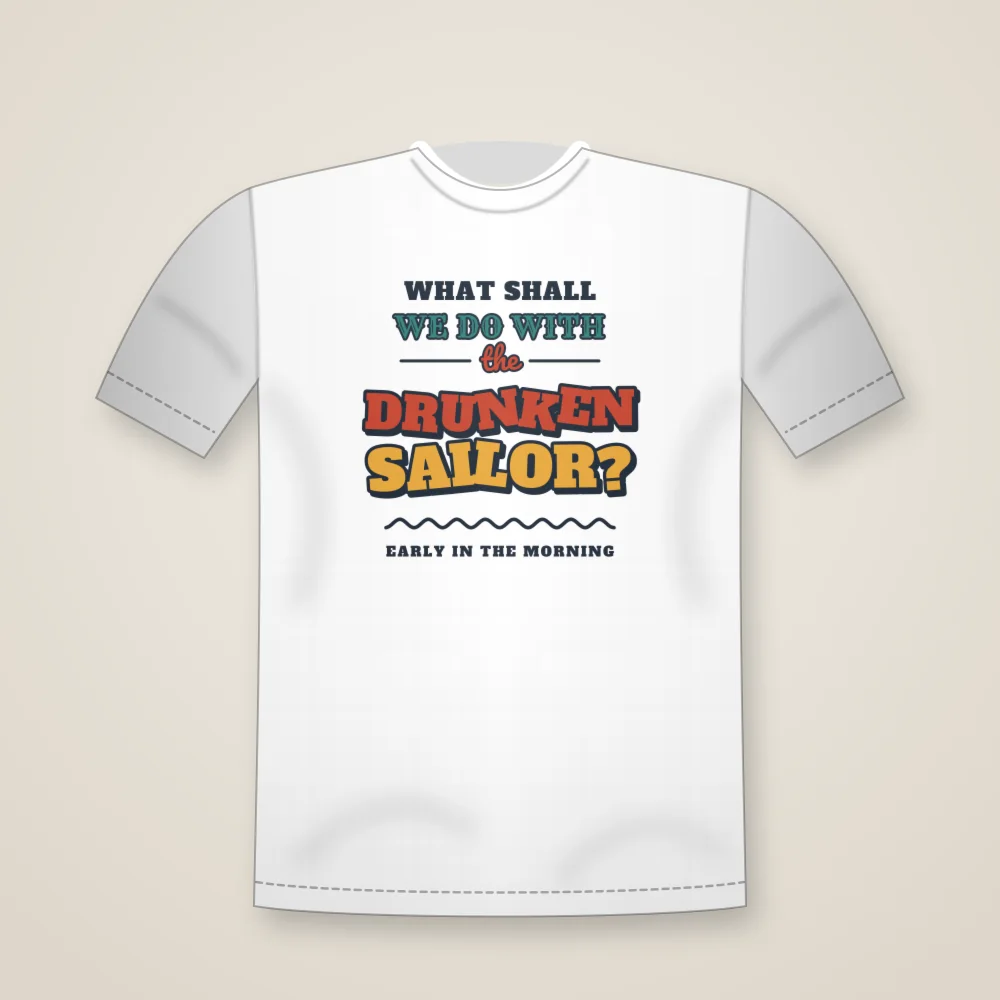
What Shall We Do?
The eternal question, set in type.Available as: T-shirts, Hoodies, Mugs, Tote bags, Posters, Stickers
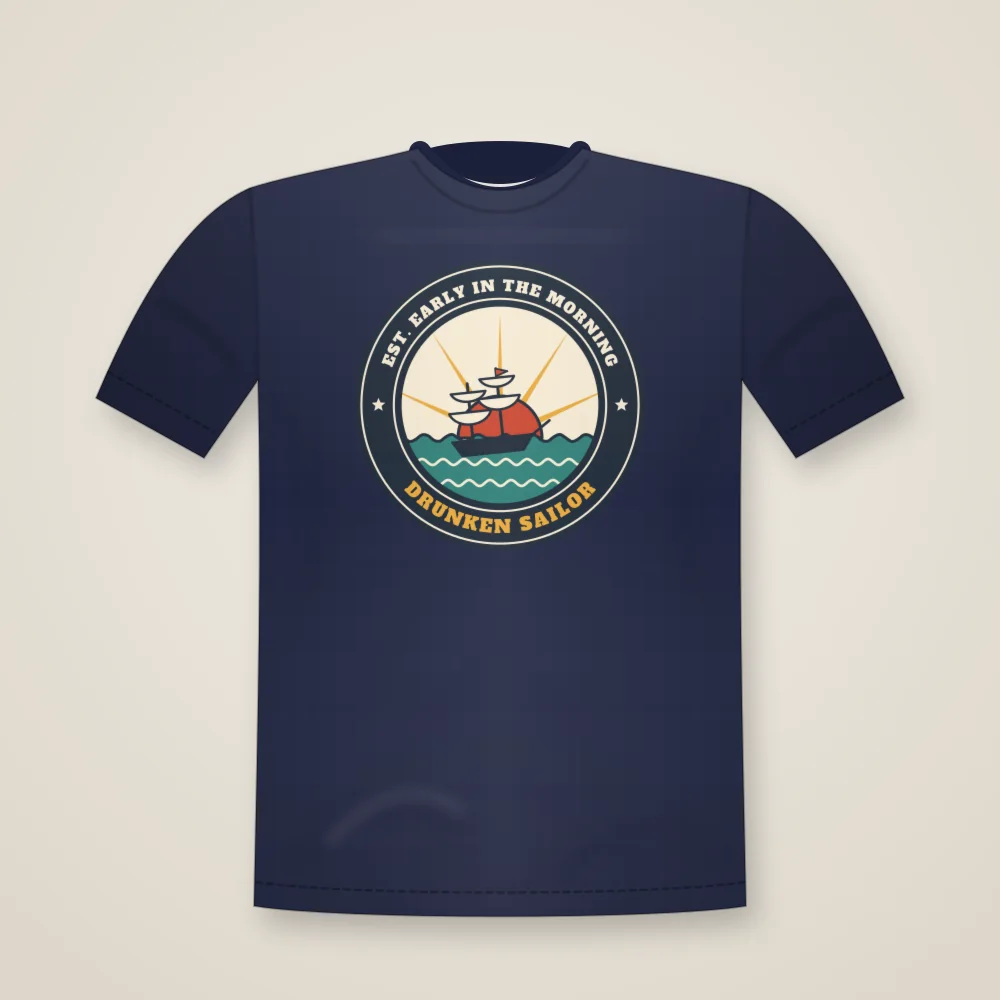
Est. Early in the Morning
A vintage badge for the dawn crew.Available as: T-shirts, Hoodies, Mugs, Tote bags, Posters, Stickers
 New
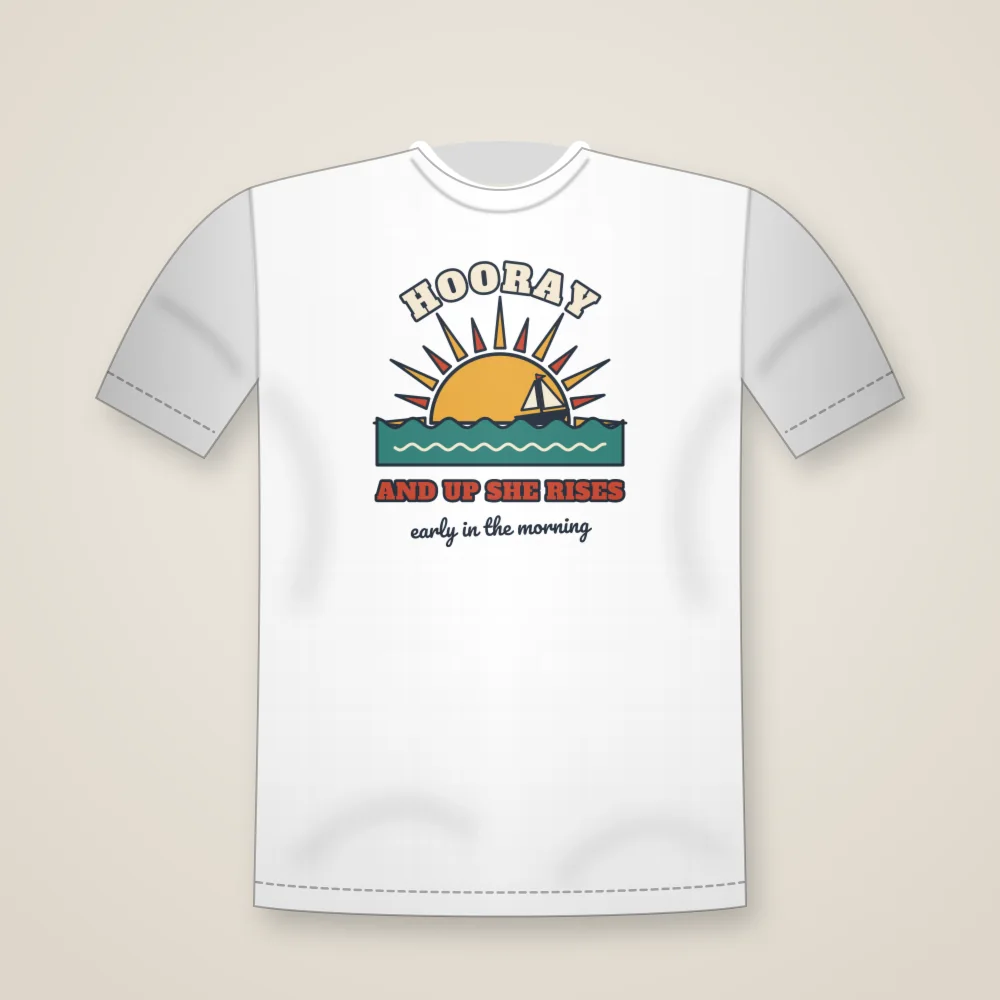
Hooray and Up She Rises
The chorus, with sunrise.Available as: T-shirts, Hoodies, Mugs, Tote bags, Posters, Stickers
 New
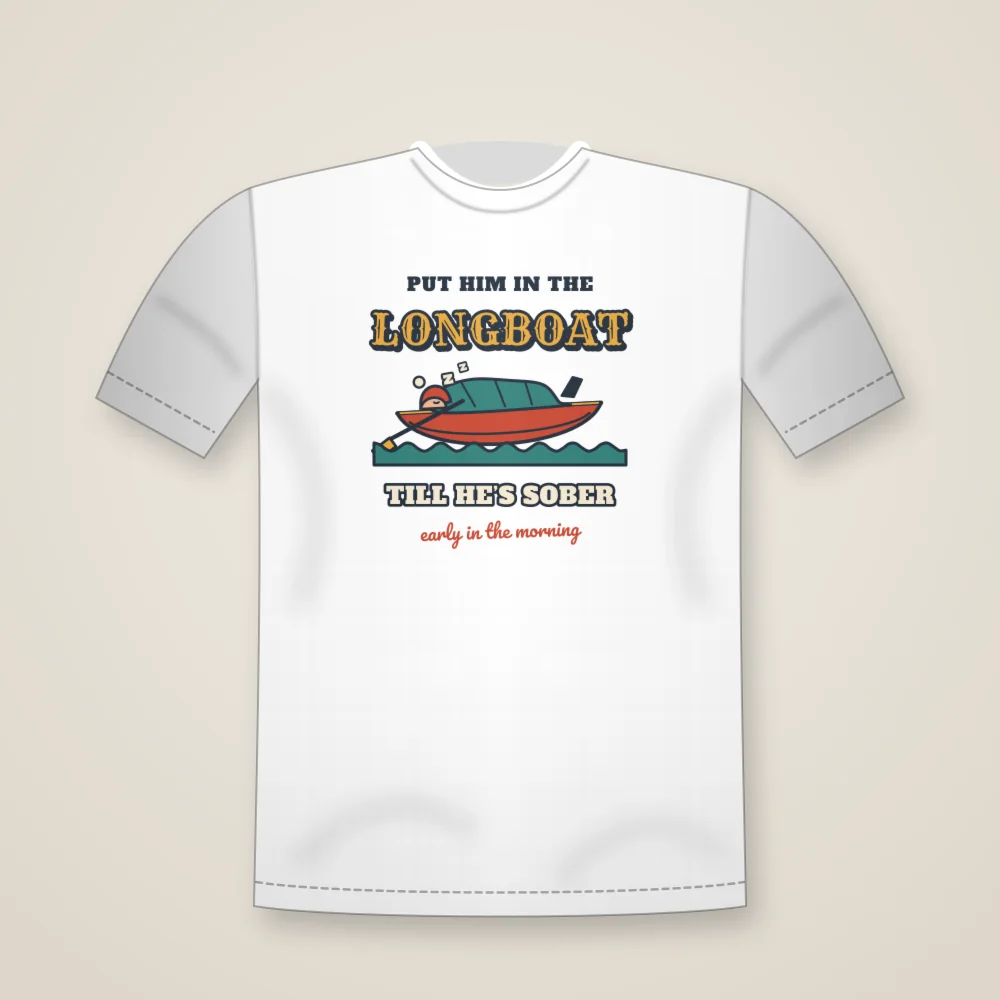
Longboat Till He's Sober
Verse two: the traditional remedy.Available as: T-shirts, Hoodies, Mugs, Tote bags, Posters, Stickers