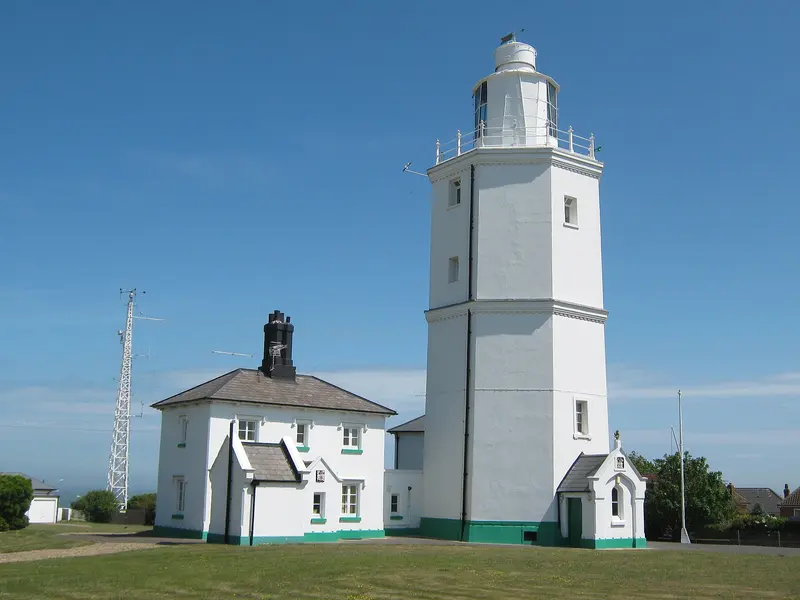
This week marks an anniversary in British maritime history. On 26 November 1998, North Foreland Lighthouse on the Kent coast became the last Trinity House lighthouse to be automated, and its keepers left. After centuries of keepers tending its lights, the era of the Trinity House lighthouse keeper came to an end.
Our "Leaning Lighthouses" designs are cheerfully wonky. The real ones, and the people who kept them, were anything but.
Who looks after the lighthouses
Trinity House is the General Lighthouse Authority for England, Wales, the Channel Islands and Gibraltar. It is also a charity, describing itself as the UK's largest-endowed maritime charity. Its website says it looks after more than 60 lighthouses and around 450 navigation buoys, and gives around £4 million a year to maritime charities, including cadet training, welfare for retired mariners and safety education.
Its history is long: Trinity House says it was incorporated by Henry VIII on 20 May 1514.
A light since 1499
Trinity House's page on North Foreland traces the site's history:
- a light was first shown there in 1499;
- the first proper lighthouse, a timber tower, was built in 1636 and burned down in 1683;
- the present lighthouse was built in 1691;
- Trinity House bought it in 1832.
Reading a light's "character"
Every lighthouse has its own pattern, written in a kind of shorthand on charts and in Trinity House's listings. North Foreland's is Fl (5) WR 20s. Trinity House explains that the light flashes five times in a 20-second cycle; the W and R stand for white and red. Its range is given as 19 nautical miles, with an intensity of 60,800 candela.
Trinity House's web page adds a sensible note: the details there are "not for navigation purposes". Sailors use official charts and notices.
The end of the keepers
Trinity House's article "A fine farewell" describes how its automation programme ended in 1998 with the conversion of three stations: the Lizard in Cornwall, Nash Point in Wales and, finally, North Foreland, which it calls "the last manned Trinity House lighthouse".
On 26 November 1998 a farewell ceremony was held for the last six keepers, attended by the Duke of Edinburgh, who was then Master of Trinity House.
How lighthouses are run now
Automation didn't switch the lights off. Trinity House says North Foreland is now run remotely from its Planning Centre in Harwich, Essex, and its offices and buoy yards are at Harwich and Swansea. Trinity House also inspects buoys that are looked after by port authorities, utility companies and offshore operators.
Trinity House's page on North Foreland also advertises holiday cottages there, so it's possible to stay right next to a working light.
Seeing a lighthouse this winter
Lighthouses make good destinations for a winter walk, but they stand where the coast is most exposed. Before you go:
- check the weather and tide times;
- keep well back from cliff edges, which can be unstable after heavy rain;
- if you see someone in trouble at the coast, call 999 and ask for the Coastguard.
Our post on Boxing Day walks and New Year dips has more of the Coastguard's winter advice.
If you're curious about the weather that lighthouses and their keepers have always had to face, our post on the Shipping Forecast explains how warnings for the seas around Britain began after a terrible storm in 1859, and how to read the forecast today.
Our leaning lighthouses
The real North Foreland has stood upright since 1691. Ours have clearly had a long night:
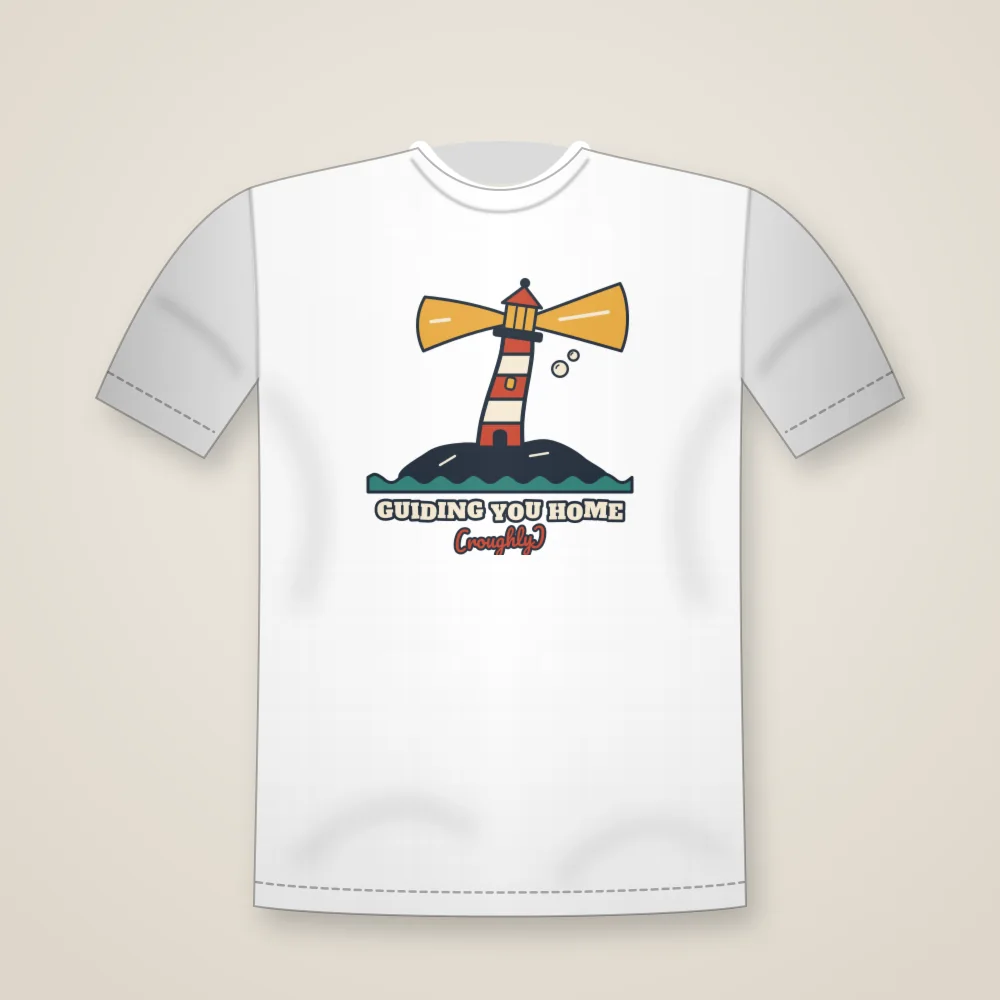
Leaning Lighthouse
Guiding you home (roughly).Available as: T-shirts, Hoodies, Mugs, Tote bags, Posters, Stickers